Myth Busted: Does Germany Legally Require All Animal Shelters to Be “No-Kill”?

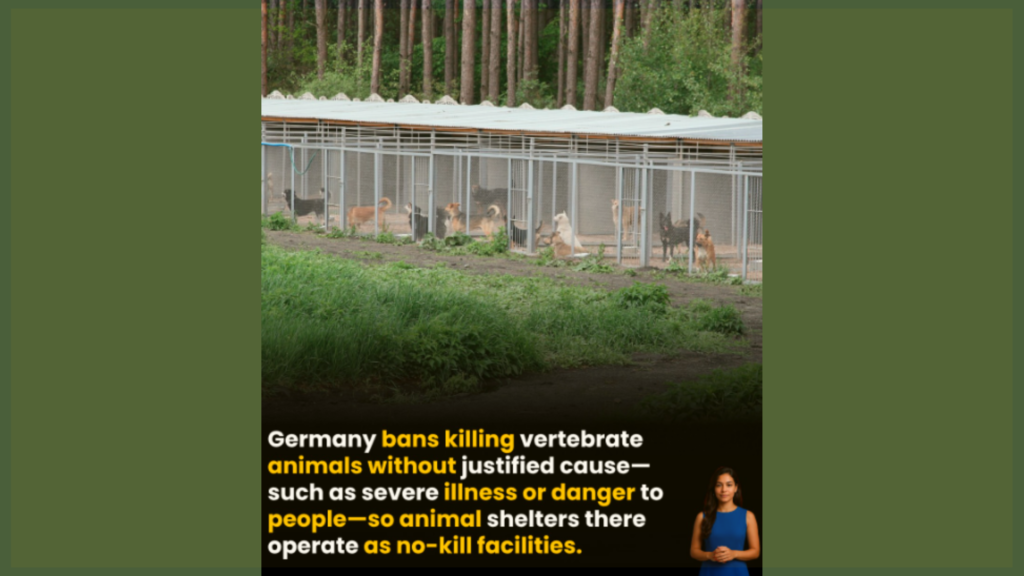
A viral social media story paints a picture of German animal shelters as calm, patient spaces where healthy animals are never euthanized and time is always on their side. While that narrative reflects genuine aspects of Germany’s animal welfare culture, it simplifies a system that is more structured — and more complex — than the post suggests.
What German Law Actually Says
Germany’s Animal Welfare Act prohibits killing vertebrate animals without a “reasonable cause.” Under the law, euthanasia is legally allowed only in defined circumstances, including untreatable medical suffering, severe injury, or when an animal poses a legitimate danger to people or other animals. Euthanasia for reasons such as space limitations, length of stay, or cost is not permitted. This removes time pressure as a justification, but it does not ban euthanasia entirely.
How German Shelters Operate in Practice
Most German animal shelters, known as Tierheime, function with a strong emphasis on preservation of life. Healthy, adoptable animals are typically not euthanized, even if they require long-term care or behavioral support. Many dogs remain in shelters for months or even years while staff focus on training, rehabilitation, and careful placement. When euthanasia does occur, it must be veterinarian-directed and legally defensible under animal welfare standards.
Why Germany Can Sustain This Model
Germany’s shelter outcomes are shaped by a broader animal welfare infrastructure. Mandatory pet registration, widespread microchipping, regulated breeding, and strong spay and neuter participation significantly reduce intake. Stray dog populations are relatively low, and abandonment carries legal consequences. Public funding and cultural expectations around animal responsibility further stabilize the system, allowing shelters to operate without constant overcrowding.
Where the Viral Story Falls Short
The myth lies in the implication that Germany has eliminated euthanasia altogether or that its shelter model could be replicated simply by changing policy language. The reality is that Germany’s approach is the result of decades of legal enforcement, public compliance, and prevention-focused systems. Without addressing intake, resources, and long-term care capacity, similar laws elsewhere would not automatically produce the same outcomes.
What This Means for the U.S. and Las Vegas
In regions like Southern Nevada, shelters and rescues face high intake driven by housing instability, limited access to veterinary care, and economic pressures. Comparing outcomes without acknowledging these differences can misrepresent the challenges local organizations navigate daily. Germany’s model offers insight into what’s possible when prevention leads the system, but meaningful change requires sustained investment far beyond shelter walls.
The Bigger Takeaway
Germany is not “no-kill” in an absolute sense, but it is legally and culturally structured to protect animal life whenever possible. The real lesson isn’t about perfection — it’s about how prevention, accountability, and community responsibility combine to reduce crisis-level sheltering and give animals something many systems can’t: time.